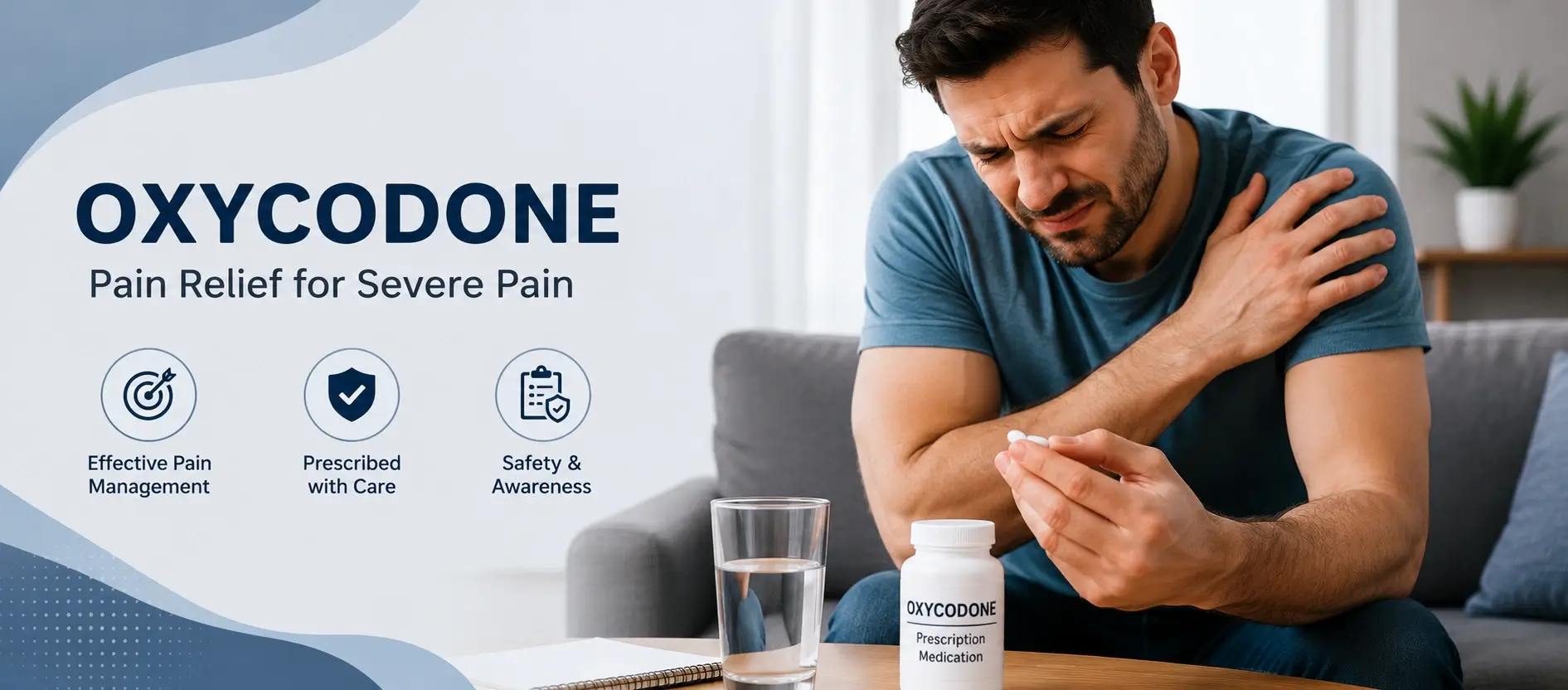
Oxycodone is a prescription opioid analgesic used to manage pain that is severe enough to require an opioid medicine when alternative treatment options are inadequate. It works primarily by changing how the brain and nervous system respond to pain.
Because oxycodone is a potent opioid, its use requires careful medical supervision. It carries important risks, including addiction, abuse, misuse, respiratory depression, overdose, physical dependence, and potentially dangerous interactions with alcohol, benzodiazepines, and other central nervous system depressants. Current U.S. prescribing information recommends reserving oxycodone for patients for whom alternative treatments are ineffective, not tolerated, or otherwise inadequate.
What Is Oxycodone?
Oxycodone is an opioid analgesic available in several prescription formulations. It is used to treat severe pain when an opioid analgesic is considered medically necessary and other treatment options are insufficient.
Oxycodone is available as an immediate-release medicine and in extended-release formulations. Different formulations have different instructions and should not be treated as interchangeable.
U.S. oxycodone products are prescription medicines and are classified as Schedule II controlled substances.
The medicine should only be used according to the prescription and instructions provided by the healthcare professional who prescribed it.
What Is Oxycodone Used For?
Oxycodone is used to manage severe pain that requires treatment with an opioid analgesic when alternative options are inadequate. The decision to prescribe it depends on the severity of pain, the underlying condition, previous treatment response, and the patient’s individual risk factors.
Depending on the formulation and clinical circumstances, oxycodone may be prescribed for severe acute pain or for carefully selected patients with persistent severe pain.
It is not intended to be a routine first-choice treatment for mild or ordinary pain.
How Does Oxycodone Work?
Oxycodone works by acting on opioid receptors in the central nervous system. These receptors are involved in how the body perceives and responds to pain.
By changing pain signaling in the brain and nervous system, oxycodone can reduce the perception of pain. The same central nervous system effects can also produce drowsiness, sedation, constipation, and slowed breathing.
This combination of therapeutic effects and potential risks is why oxycodone requires careful dosing and medical monitoring.
Oxycodone Dosage: Why Individualization Matters
There is no single oxycodone dosage that is appropriate for everyone. The prescribed dose depends on the formulation, severity of pain, previous opioid exposure, other medicines, medical history, and individual response to treatment.
Current U.S. prescribing information emphasizes individualized dosing and recommends using the lowest effective dosage for the shortest duration consistent with the patient’s treatment goals.
Patients should never determine their own opioid dosage based on information found online.
Important principles include:
- Take oxycodone exactly as prescribed.
- Do not take more than the prescribed amount.
- Do not take it more frequently than directed.
- Do not share oxycodone with another person.
- Do not change from one oxycodone formulation to another without medical guidance.
- Do not stop regular treatment abruptly without discussing it with a healthcare professional.
Oxycodone Painkiller Side Effects
Oxycodone can cause side effects because it affects the central nervous system. Some effects may be mild, while others can be serious or life-threatening.
Common Side Effects
Potential side effects associated with oxycodone include:
- Nausea
- Vomiting
- Constipation
- Drowsiness
- Dizziness
- Headache
- Weakness
- Itching
The intensity of side effects can vary between individuals and may be influenced by the dose, other medicines, age, and overall health.
Serious Side Effects
Oxycodone can cause serious respiratory depression, particularly when treatment begins or the dose is increased.
Seek immediate medical attention if a person develops:
- Slow or shallow breathing
- Long pauses between breaths
- Severe difficulty breathing
- Extreme sleepiness
- Inability to wake up
- Loss of consciousness
- Severe allergic symptoms
- Seizures
Severe breathing problems or an inability to awaken after taking oxycodone should be treated as a medical emergency.
Oxycodone and Respiratory Depression
Respiratory depression is one of the most important safety concerns associated with oxycodone.
Opioids can reduce the brain’s response to carbon dioxide and decrease respiratory drive. This can result in dangerously slow or shallow breathing.
The risk can be particularly important during the first 24 to 72 hours of treatment and following an increase in dosage.
Patients and caregivers should understand the warning signs of opioid overdose and know when emergency assistance is necessary.
Oxycodone and Alcohol
Alcohol can significantly increase the risks associated with oxycodone.
Both oxycodone and alcohol can depress the central nervous system. Taking them together may increase sedation, impaired coordination, respiratory depression, coma, and the risk of death.
Patients prescribed oxycodone should discuss alcohol use with their healthcare professional and follow the medication’s official safety instructions.
Oxycodone and Benzodiazepines
Combining oxycodone with benzodiazepines or other central nervous system depressants can be dangerous.
Medicines such as certain benzodiazepines can increase opioid-related sedation and respiratory depression. FDA-approved oxycodone labeling specifically warns about concomitant use with benzodiazepines and other CNS depressants.
Patients should tell their healthcare professional about all prescription medicines, over-the-counter products, supplements, and other substances they use before beginning oxycodone treatment.
Other Oxycodone Drug Interactions
Oxycodone can interact with medicines that affect how it is metabolized or that increase central nervous system depression.
For example, medicines that inhibit the CYP3A4 enzyme can increase oxycodone concentrations in the body. This may increase or prolong adverse effects and can contribute to potentially fatal respiratory depression.
Because medication interactions can be complex, patients should provide their healthcare professional with a complete medication list.
Can Oxycodone Cause Addiction?
Yes. Oxycodone carries risks of addiction, abuse, and misuse, even when used at prescribed doses.
Current U.S. prescribing information includes a boxed warning addressing addiction, abuse, and misuse. These risks can lead to overdose and death.
Risk factors can include a personal or family history of substance-use problems, previous overdose, mental health conditions, and misuse of prescription medicines.
This does not mean that every person who receives oxycodone will develop addiction. However, the possibility must be considered when deciding whether an opioid is appropriate.
Oxycodone Dependence and Withdrawal
Physical dependence can develop with continued opioid use.
Dependence means the body adapts to the presence of the medicine. If regular opioid treatment is suddenly stopped or substantially reduced, withdrawal symptoms may occur.
Possible opioid withdrawal symptoms include:
- Anxiety
- Restlessness
- Sweating
- Muscle aches
- Runny nose
- Abdominal cramps
- Nausea
- Diarrhea
- Difficulty sleeping
Patients who have been taking oxycodone regularly should speak with their healthcare professional before stopping treatment. MedlinePlus specifically advises patients not to stop oxycodone suddenly without medical guidance.
Oxycodone Overdose: Warning Signs
An oxycodone overdose can be life-threatening and requires immediate medical attention.
Possible overdose signs include:
- Very slow or shallow breathing
- Unusual snoring or long pauses in breathing
- Extreme sleepiness
- Inability to wake the person
- Limp or weak muscles
- Cold or clammy skin
- Slow heartbeat
- Loss of consciousness
MedlinePlus advises calling emergency services immediately if someone taking oxycodone has collapsed, has a seizure, has difficulty breathing, or cannot be awakened.
Naloxone and Opioid Overdose
Naloxone is an opioid antagonist that can rapidly reverse opioid-induced respiratory depression in an overdose.
People who are prescribed opioids or who may be exposed to opioid overdose risk should discuss naloxone availability with a healthcare professional or pharmacist.
Naloxone does not replace emergency medical care. Emergency services should be contacted whenever an opioid overdose is suspected.
Oxycodone and Driving
Oxycodone can impair alertness, reaction time, coordination, and judgment.
Patients should not drive or operate machinery until they know how oxycodone affects them.
Combining oxycodone with alcohol, benzodiazepines, sleep medicines, or other sedating substances can increase impairment and make driving particularly dangerous.
Who Should Discuss Oxycodone Carefully With a Doctor?
Oxycodone requires additional consideration in people with certain medical conditions or risk factors.
Tell your healthcare professional if you have:
- Breathing problems
- Asthma or other lung conditions
- Sleep apnea
- Liver disease
- Kidney disease
- A history of substance-use disorder
- A previous opioid overdose
- A history of seizures
- Head injury or increased intracranial pressure
- Depression or other mental health conditions
Patients should also discuss pregnancy, breastfeeding, and all current medicines before treatment.
Oxycodone During Pregnancy
Regular opioid use during pregnancy can expose the developing baby to opioids and may result in neonatal opioid withdrawal syndrome after birth.
Pregnant patients or those planning pregnancy should discuss oxycodone treatment with their healthcare professional before making any changes.
Do not stop prescribed opioid treatment suddenly without medical guidance, as abrupt changes can also create risks for the patient.
Oxycodone Extended-Release vs. Immediate-Release
Oxycodone is available in different formulations, and these products should not be used interchangeably without professional guidance.
Immediate-release formulations are designed to release oxycodone more quickly, while extended-release formulations are designed to provide longer-lasting medication exposure.
Extended-release oxycodone products have specific administration requirements. For example, certain extended-release tablets must be swallowed whole and should not be cut, crushed, dissolved, or chewed because doing so can release the medication too rapidly and potentially result in overdose.
How to Store Oxycodone Safely
Oxycodone should be stored securely because accidental ingestion can cause serious harm, particularly in children.
Keep prescription opioids out of sight and reach of children and away from anyone who has not been prescribed the medicine.
Do not share oxycodone with family members, friends, or anyone else, even if they report having similar pain.
Unused opioid medication should be disposed of according to appropriate U.S. medication-disposal guidance.
What to Know Before Taking Oxycodone
Before starting oxycodone, patients should understand the following:
- Oxycodone is a prescription opioid for severe pain when alternative treatments are inadequate.
- It can cause addiction, abuse, misuse, and physical dependence.
- It can cause serious or fatal respiratory depression.
- Alcohol and other sedating substances can increase its risks.
- It should be taken exactly as prescribed.
- It should never be shared with another person.
- Regular treatment should not be stopped abruptly without medical guidance.
- Suspected overdose requires immediate emergency assistance.
How BuyJpdol Can Support Oxycodone Education
BuyJpdol can use educational content to help readers understand prescription opioid safety, responsible medication use, and the importance of professional medical supervision.
Information about oxycodone should clearly explain its therapeutic role while also addressing its potential risks.
Readers researching oxycodone should be encouraged to verify medication information through authoritative medical sources and discuss personal treatment decisions with a licensed healthcare professional.
Have questions about oxycodone or prescription pain management? Speak with a qualified healthcare professional or pharmacist for advice based on your medical history, current medications, and individual treatment needs.
Frequently Asked Questions About Oxycodone
What is oxycodone?
Oxycodone is a prescription opioid analgesic used to manage pain severe enough to require an opioid when alternative treatment options are inadequate.
What is oxycodone used for?
Oxycodone is used for the management of severe pain when an opioid analgesic is considered necessary and alternative treatments are not sufficient.
Is oxycodone a strong painkiller?
Oxycodone is a prescription opioid analgesic with significant effects on the central nervous system. Its use requires careful medical evaluation because it carries risks including respiratory depression, addiction, misuse, and overdose.
What are common oxycodone side effects?
Potential side effects include nausea, vomiting, constipation, dizziness, drowsiness, headache, weakness, and itching. More serious reactions can include respiratory depression and loss of consciousness.
Can oxycodone cause addiction?
Yes. Oxycodone carries risks of addiction, abuse, misuse, and physical dependence. These risks can occur even when opioids are used as prescribed.
Can oxycodone be taken with alcohol?
Combining oxycodone with alcohol can increase central nervous system depression and may increase the risk of severe sedation, respiratory depression, coma, and death. Patients should discuss alcohol use with their healthcare professional.
Can oxycodone be taken with benzodiazepines?
Combining oxycodone with benzodiazepines or other CNS depressants can increase the risk of serious sedation and respiratory depression. This combination should only be used when specifically evaluated and managed by a healthcare professional.
Can I stop oxycodone suddenly?
Patients who have been taking oxycodone regularly should not stop treatment suddenly without medical guidance because withdrawal symptoms can occur.
What are the signs of an oxycodone overdose?
Warning signs include very slow or shallow breathing, extreme sleepiness, inability to wake up, limp muscles, cold or clammy skin, slow heartbeat, seizures, or loss of consciousness. Emergency medical assistance should be obtained immediately.
Can oxycodone affect driving?
Yes. Oxycodone can cause drowsiness, dizziness, impaired coordination, and reduced alertness. Do not drive or operate machinery until you know how the medicine affects you.
Conclusion
Oxycodone is a prescription opioid painkiller used for severe pain when alternative treatment options are inadequate. It can provide meaningful pain relief when appropriately prescribed, but its benefits must always be weighed against significant risks.
Addiction, misuse, physical dependence, respiratory depression, overdose, sedation, and dangerous drug interactions are important safety considerations. Current U.S. prescribing information recommends using the lowest effective dose for the shortest appropriate duration and reserving opioid therapy for patients who genuinely require it.
Patients should take oxycodone exactly as prescribed, avoid sharing the medication, discuss all other medicines and substances with their healthcare professional, and seek emergency assistance when overdose or severe breathing problems are suspected.
Responsible opioid treatment begins with professional assessment, accurate medication information, careful monitoring, and strict adherence to the prescribed treatment plan.